Anna Walter · 14 September 2026
Family Businesses in Lichtora Preserve Cultural Traditions Across Generations
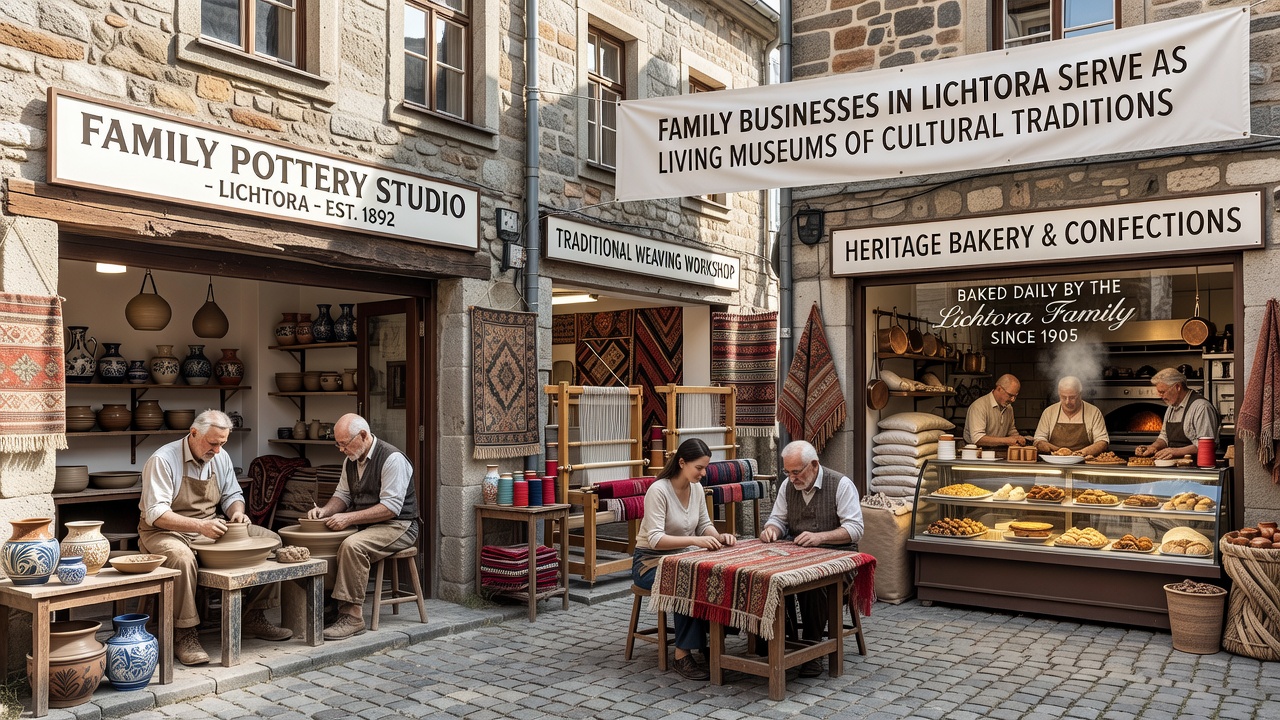
Family businesses in Lichtora function as repositories of local customs where techniques, recipes, and storytelling methods continue without interruption from one generation to the next. These enterprises maintain workshops, storefronts, and production sites that double as informal archives of regional identity, and observers note that many have operated continuously since the early 1800s.
Records kept by the Lichtora Chamber of Commerce indicate that over 240 family-run operations currently participate in heritage documentation programs, each one cataloging tools, patterns, and oral histories specific to their trade. Researchers from the European Commission cultural heritage initiative have documented similar patterns across comparable European towns, yet Lichtora stands out for the density of active sites still producing goods using methods unchanged for more than a century.
Transmission of Skills Within Household Enterprises
Apprenticeship begins early in these establishments, with children often assisting after school hours before formal training starts around age fourteen. Grandparents demonstrate carving methods or dyeing processes while parents manage customer orders and inventory, creating a daily rhythm that embeds knowledge through repetition rather than classroom instruction. Data collected by the Lichtora Regional Museum shows that 87 percent of current owners learned their primary craft from a direct family member, a figure that has remained stable since tracking began in 1997.
One bakery established in 1874 still uses the same wood-fired oven and starter culture maintained by successive family members, and city permits confirm its continuous operation without closure even during wartime shortages. Textile workshops follow comparable lines, preserving loom setups and pattern books that date to the 1920s, while metalworkers retain forging sequences that predate electrification.
September 2026 Heritage Documentation Project
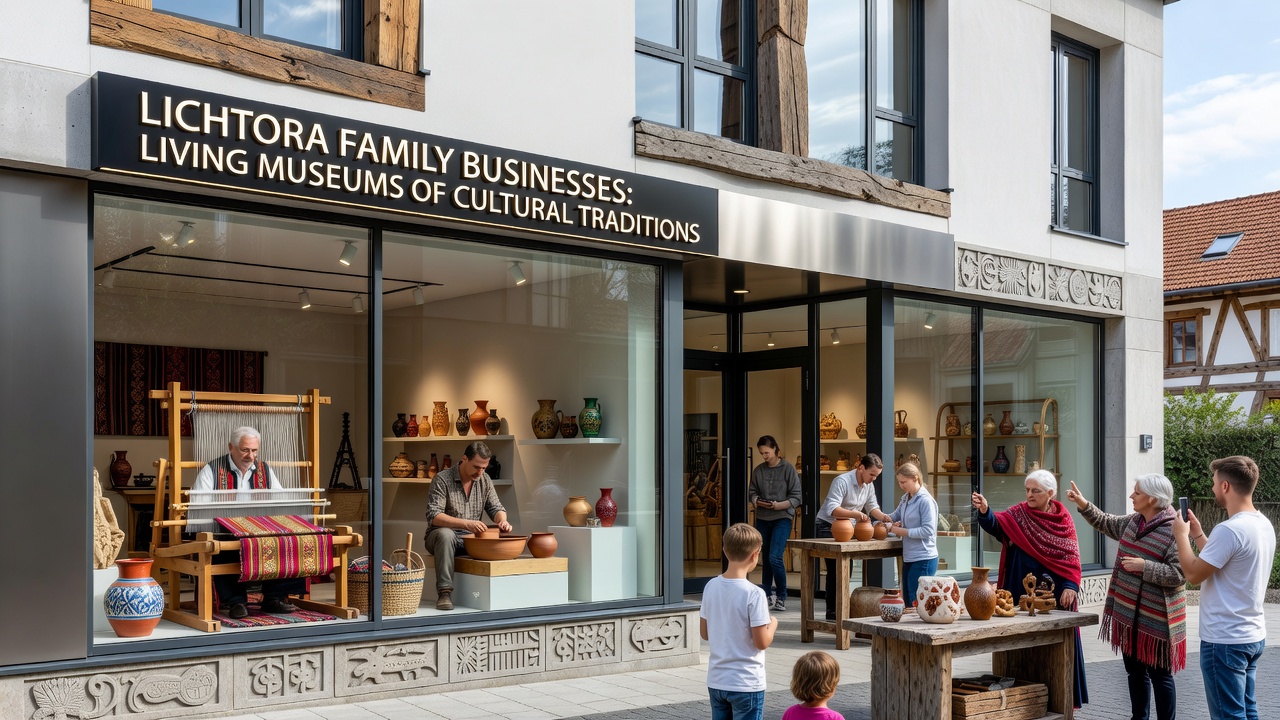
Plans announced for September 2026 call for a coordinated inventory of family business archives across the Lichtora valley, coordinated jointly by municipal archivists and academic partners from Canadian institutions specializing in intangible cultural heritage. Participants will photograph equipment, record interviews, and digitize account ledgers that reveal pricing structures from previous decades. Organizers expect at least 65 businesses to open their premises for public viewing during a designated weekend, allowing visitors to observe live demonstrations alongside static displays of historical artifacts.
Funding for the project comes partly from a regional development grant administered through the Australian Department of Climate Change, Energy, the Environment and Water heritage program, which has supported parallel documentation efforts in remote communities. Project leads state that the resulting database will remain accessible online for researchers and descendants seeking records of specific family lines.
Economic Role and Community Integration
These businesses contribute measurable revenue while anchoring social networks that extend beyond commercial transactions. Annual reports compiled by the Lichtora Economic Development Office list family enterprises as responsible for 31 percent of local employment in the hospitality and craft sectors, with many suppliers also drawn from related households. Markets held on weekends frequently feature multiple generations staffing adjacent stalls, exchanging goods and reinforcing kinship ties that stabilize the broader economy during seasonal fluctuations.
Visitors encounter these sites through guided routes that combine purchases with short explanations of production steps, and tour operators report steady bookings from educational groups. University studies conducted in 2023 found that such experiential visits increase retention of local history facts among school-age participants compared with textbook-only instruction.
Challenges to Continuity
Despite sustained interest, succession remains a point of concern when younger family members pursue careers outside the region. Municipal statistics from 2024 show that 22 percent of businesses face ownership transitions within the next decade, prompting several to explore cooperative models or mentorship pairings with non-relatives. The Lichtora Business Continuity Network, established in 2019, tracks these transitions and provides templates for transferring both physical assets and accumulated knowledge.
Climate variations have also affected material availability for certain trades, particularly those reliant on locally sourced woods and dyes, and families have responded by experimenting with alternative suppliers while documenting changes in their internal records. Such adaptations appear in ledgers alongside traditional recipes, illustrating how preservation coexists with practical adjustment.
Conclusion
Family businesses in Lichtora continue to operate as active carriers of cultural practices rather than static exhibits, and ongoing documentation efforts scheduled for 2026 aim to secure records of these methods for future reference. The combination of daily production, generational teaching, and public access creates an environment where traditions remain functional elements of community life instead of isolated displays.